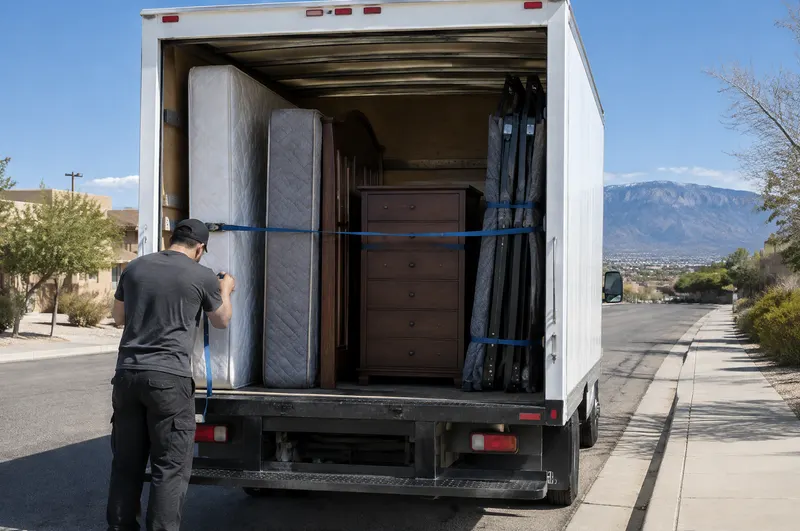
Should You Take the Drawers Out to Move a Dresser?
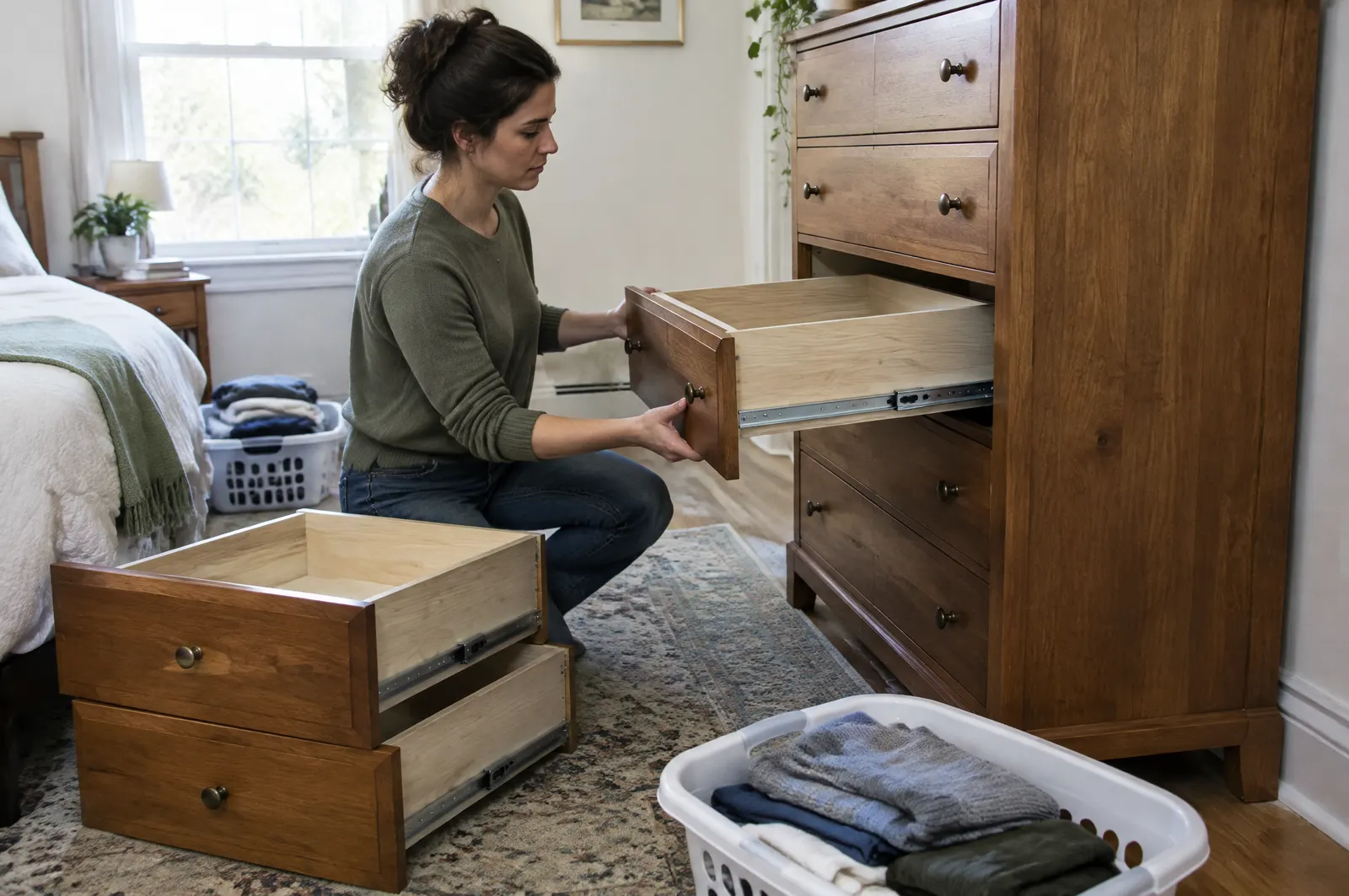
Always empty a dresser. Take the drawers out when weight or stairs are the problem, and leave them in when the dresser is going a short way on one level. Moving guides disagree on this because they are solving different problems.
Why the advice conflicts
Lugg says to take drawers out, because it lowers the weight and the center of gravity (Lugg). U-Pack says to leave them in so the dresser can be wrapped before it goes through doorways, and to remove them only if a solid wood piece is too heavy (U-Pack). Lugg is thinking about the people carrying it. U-Pack is thinking about the finish and about loose drawers in a moving truck. Both are right for their situation.
Decide by the route
| Situation | Drawers | Why |
|---|---|---|
| Short move on one floor | In, taped shut | Less handling, nothing to lose |
| Tight doorway on a flat route | In, or out if it needs tilting | Tilting an unsecured drawer drops it on your foot |
| Any stairs | Out | Less weight and less top-heaviness |
| Solid wood, six drawers or more | Out | The weight is the problem |
| Particleboard | Out | The case is weak, so the less it carries, the better |
| Drawers stick or will not come out | In, taped | Painter's tape keeps them shut without marking |
Emptying it without tipping it
A dresser is most likely to tip when its drawers are open and the top is still loaded, so work from the top drawer down, one drawer at a time, and close each drawer before you open the next. That is practical advice, not a CPSC rule, but CPSC's own figures show why it matters: an estimated 17,800 emergency-treated tip-over injuries a year from furniture and TVs, and 44% of the people hurt are under 18 (CPSC, 2026). Keep children out of the room while you do this.
If it is anchored, release that first
CPSC recommends anchoring dressers to the wall, and new ones are sold with anti-tip devices (CPSC). So check behind the top edge before you pull. Newer dressers are also built to a federal stability standard that took effect on September 1, 2023 (CPSC). That rule binds manufacturers and does not change how you should treat the dresser you have, which may be decades old.
Across floors and down stairs
Lugg puts a fully loaded six-drawer solid wood dresser at over 150 to 200 pounds, and says emptying it takes off about 30 to 50 percent. Even empty, do not take a heavy dresser down stairs alone. Take attached mirrors off and wrap them separately (Lugg). Use felt sliders on hard floors and hard plastic ones on carpet. Walk it down with one person below and one above, on the straps or handholds, and keep it level. Do not roll it down on a dolly unless you have done that before.
Nightstands: the same rules, smaller
Empty the drawer, unplug the lamp and lift. Nightstands are not named in the federal rule's scope, so do not assume a low one was tested for stability (CPSC). Most nightstands are one-person jobs, but keep small hands away while you move them.
Before a pickup
- All drawers empty, including the small top ones
- Anti-tip strap or bracket released
- Mirror off, or tell the crew it is on
- Lamps unplugged and cords moved
- The path to the door is clear
If it is leaving for good
Dressers are the easiest bedroom piece to place. Beds4Kidz says it always needs them, and Habitat ReStore, Goodwill and Assistance League take them when they are in good shape. Broken ones have fewer options: the City of Albuquerque large item pickup is the place to start if you can get it to the curb. Otherwise, see dresser removal or nightstand removal.